Text in, city out
Type on one side and the city redraws on the other. The text is the source: review it, diff it, keep it next to the work it describes.
CityScript · text in, city out
Buildings are places, floors are the parts of them, rooms are what happens inside. Describe servers, a parcel's journey, a work flow or an operating system in a few lines of text and get a map you can read, share and walk through.
Works offline, with no account. For servers, connect a hub when you want to see what is really running.
city 26x12 packs=logistics

district route "The way" 2,2..23,9

building shop shop in route "Web shop"
  floor shop.f "Orders"
    room shop.order service "order"
building hub hub in route "Sorting hub"
  floor hub.f "Sorting"
    room hub.belt belt "belt"
    room hub.scan scanner "scanner"
building home house in route "Customer"
  floor home.f "Door"
    room home.door door "front door"

link shop.order -> hub.scan -> home.door "parcel"
pipeline parcel "A parcel" shop -> [pack] -> [ship] -> home
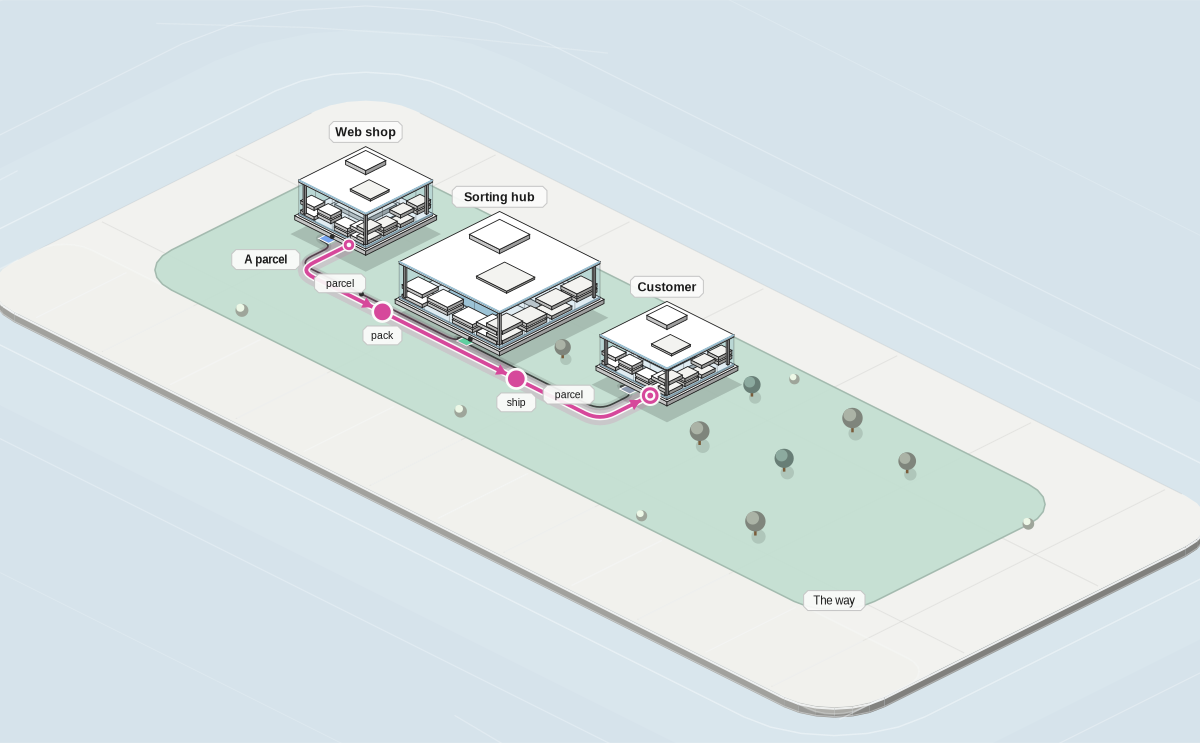
Type on one side and the city redraws on the other. The text is the source: review it, diff it, keep it next to the work it describes.
Servers have their words, and so do parcels, work flows and operating systems. Ask for a pack of them, or write your own inside the city and it travels with it.
One guide teaches an agent the language. Hand it a Compose file, a process, a supply chain or a diagram and it answers with a city.
No account, no server, nothing to install. Every city is a design, and what you write stays in your browser.
Run a hub next to your hosts and a design of real infrastructure shows health, containers and pipeline runs. Until then nothing pretends to have a status.
Share a design as a link that carries the text itself, and the pack it brings. Nothing is uploaded: whoever opens the link sees the same city.
Write CityScript yourself, start from an example, or give the guide to an AI agent together with what you already have: files, a diagram, a process.
Click a building, a room or a flow to see what is in it, what it talks to, who looks after it and what crosses a boundary.
Point the editor at a hub and a design of real infrastructure is bound to real hosts. Disconnect and it is a design again.
A parcel's journey, a work flow, an operating system, a pack of your own words and whole systems of servers, with one small design for each letter of the infrastructure alphabet. Each has its own page, and opens in the editor ready to change.
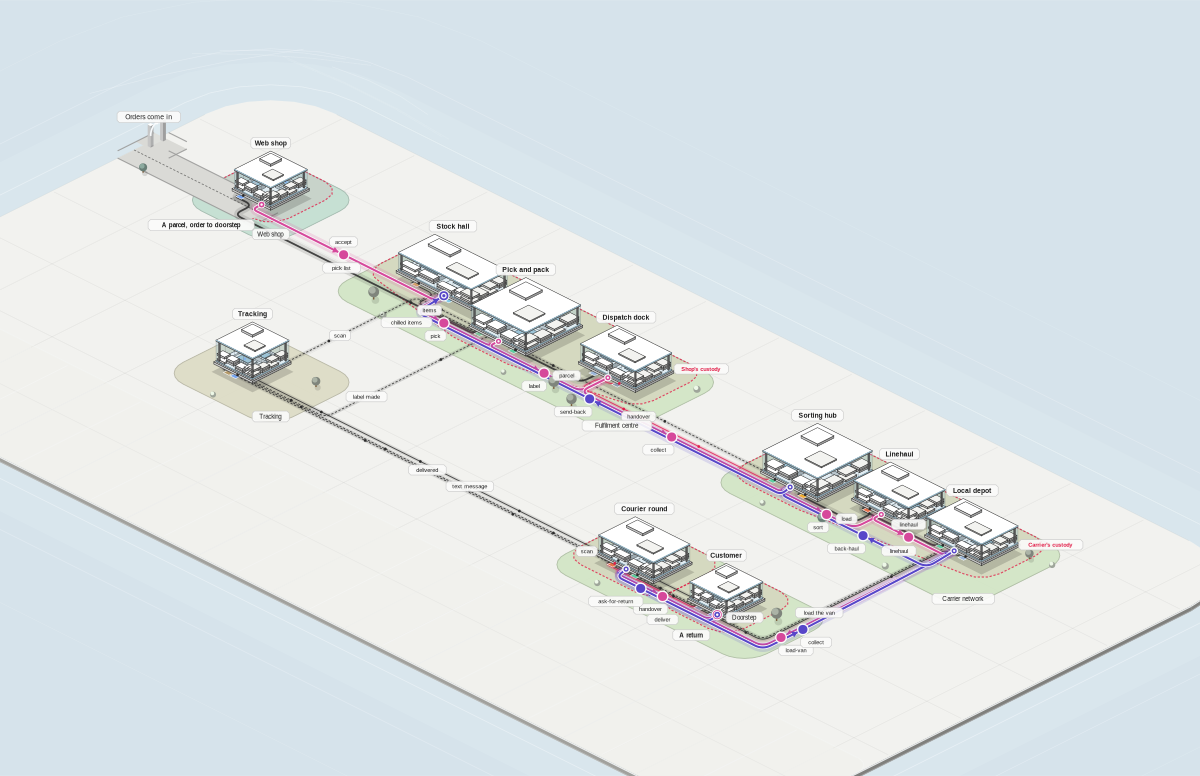
Not infrastructure: one online order from the web shop through the warehouse and the carrier's sorting hub to the customer's door, with custody at each step.
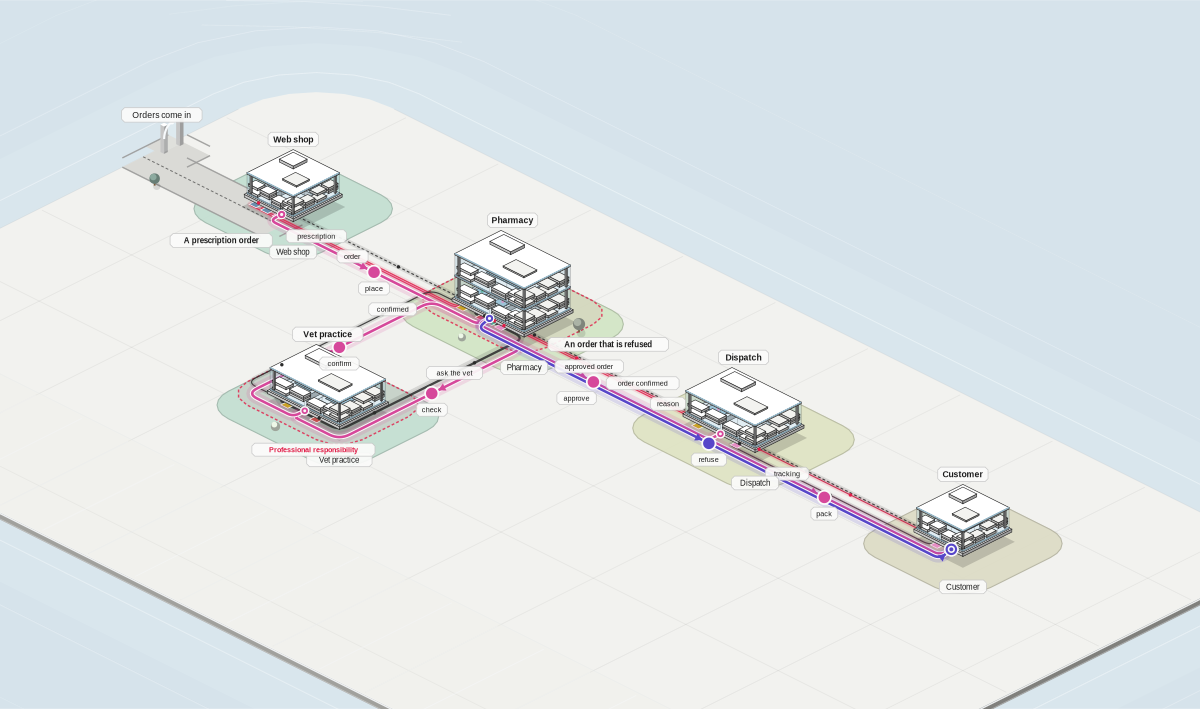
Not infrastructure: a prescription order passing between the web shop, the pharmacist, the vet and dispatch, with responsibility drawn as a boundary.
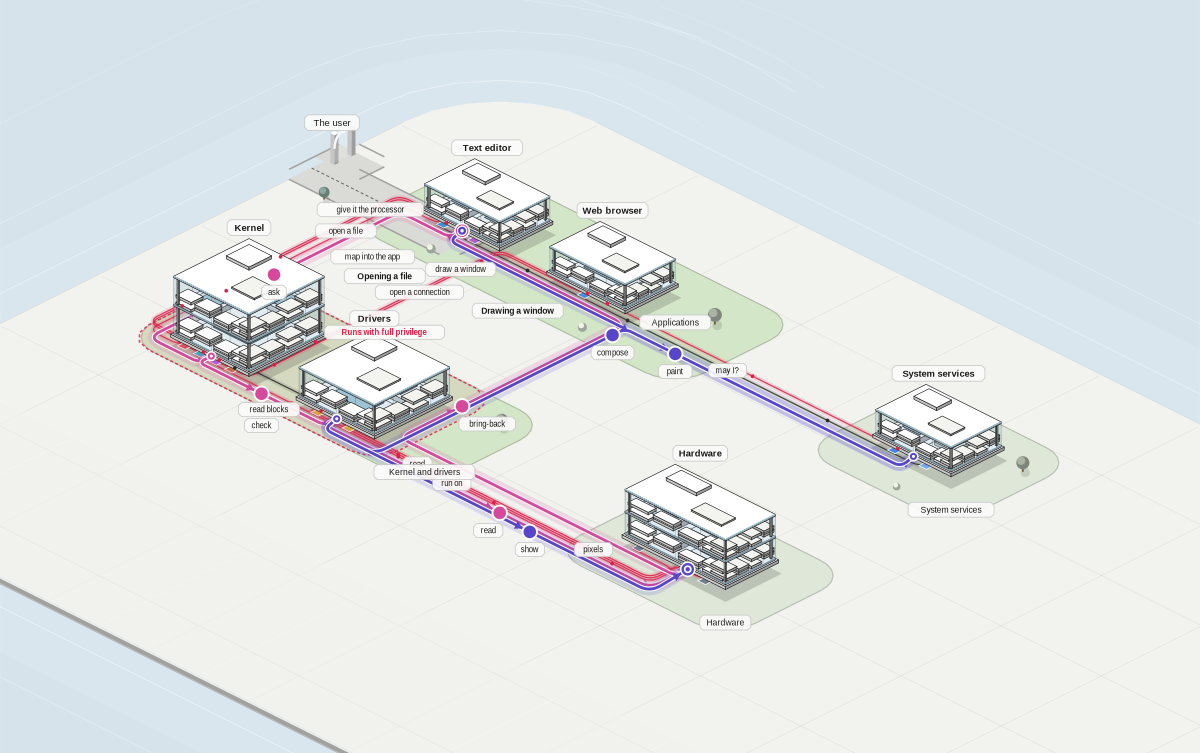
Not infrastructure: what happens when an app opens a file, through the layers of a desktop OS, with privilege drawn as a boundary and every crossing guarded.
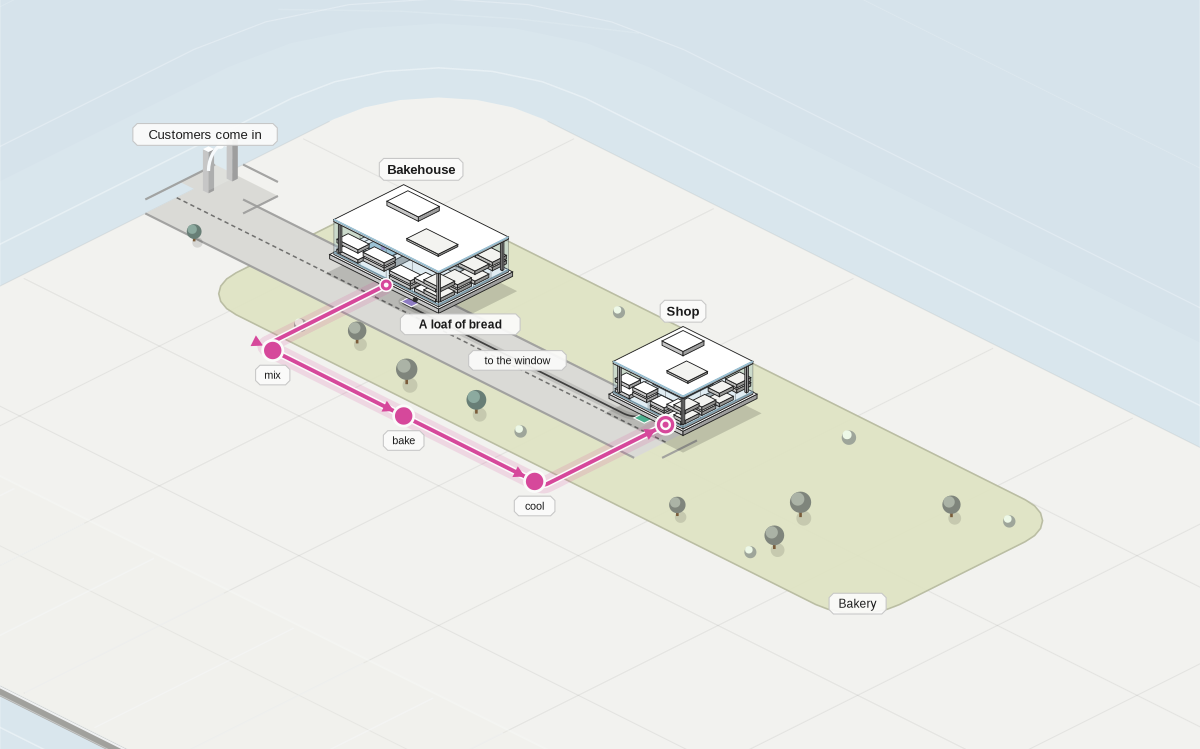
A pack written inside the city: a bakery brings its own building types, room kinds and shapes, and the city carries them in a link, a design and a file.
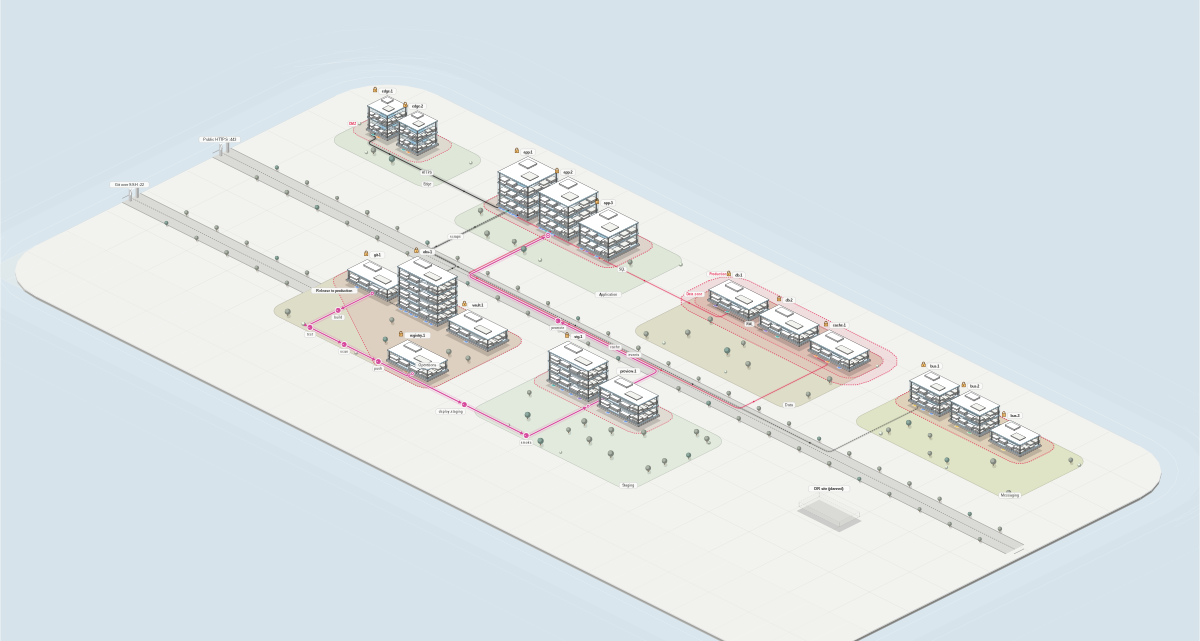
An online shop: edge, three-zone apps, Postgres with a replica, Redis, Kafka, observability, Git, a vault and staging, with the release pipeline as a flow.
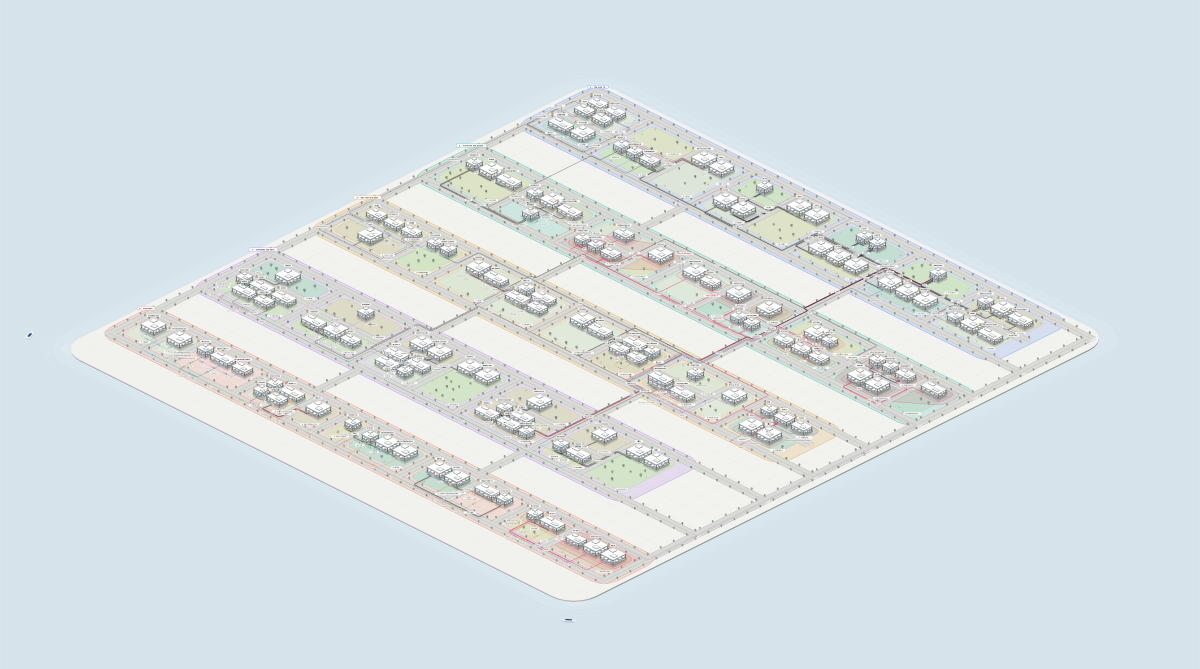
All 26 parts in five levels, from the outside in, joined by streets, avenues and flows: a request, an order's events, a release, the network, off-site copies.
Big city · sharing your changed copy needs Pro
It takes a dozen lines. Nothing to install, nothing to sign up for.
Open the live editor